A 'Grand Scale' Of Fear: Rundberg One Year Later
Just over a year ago, Jose Carrasco invited the Decibel team on a tour of Rundberg. A longtime community advocate and the current director of the Austin Voices for Education and Youth Family Resource Center at Dobie Middle School, Carrasco knows the area well. During that tour he outlined a community facing challenges, but also one rich in culture, heritage and camaraderie.
“America is one big melting pot, and that’s what Rundberg is,” Carrasco had said at the time. “America is Rundberg in every sense of the word.”
But the past twelve months have seen major changes from everything to education to resources. And an increase in immigration enforcement nationwide and across the state has had a chilling effect on this community that’s largely made up of immigrants. When the Decibel team announced we were extending our reporting project in Rundberg, we wanted to ask Carrasco what has changed since that first tour. He says the upheaval has taken a toll on residents he interacts with.
“Even a year ago, I knew that there was going to be fear,” Carrasco says. “But even then, I didn't realize how grand of a scale that was going to be like.”
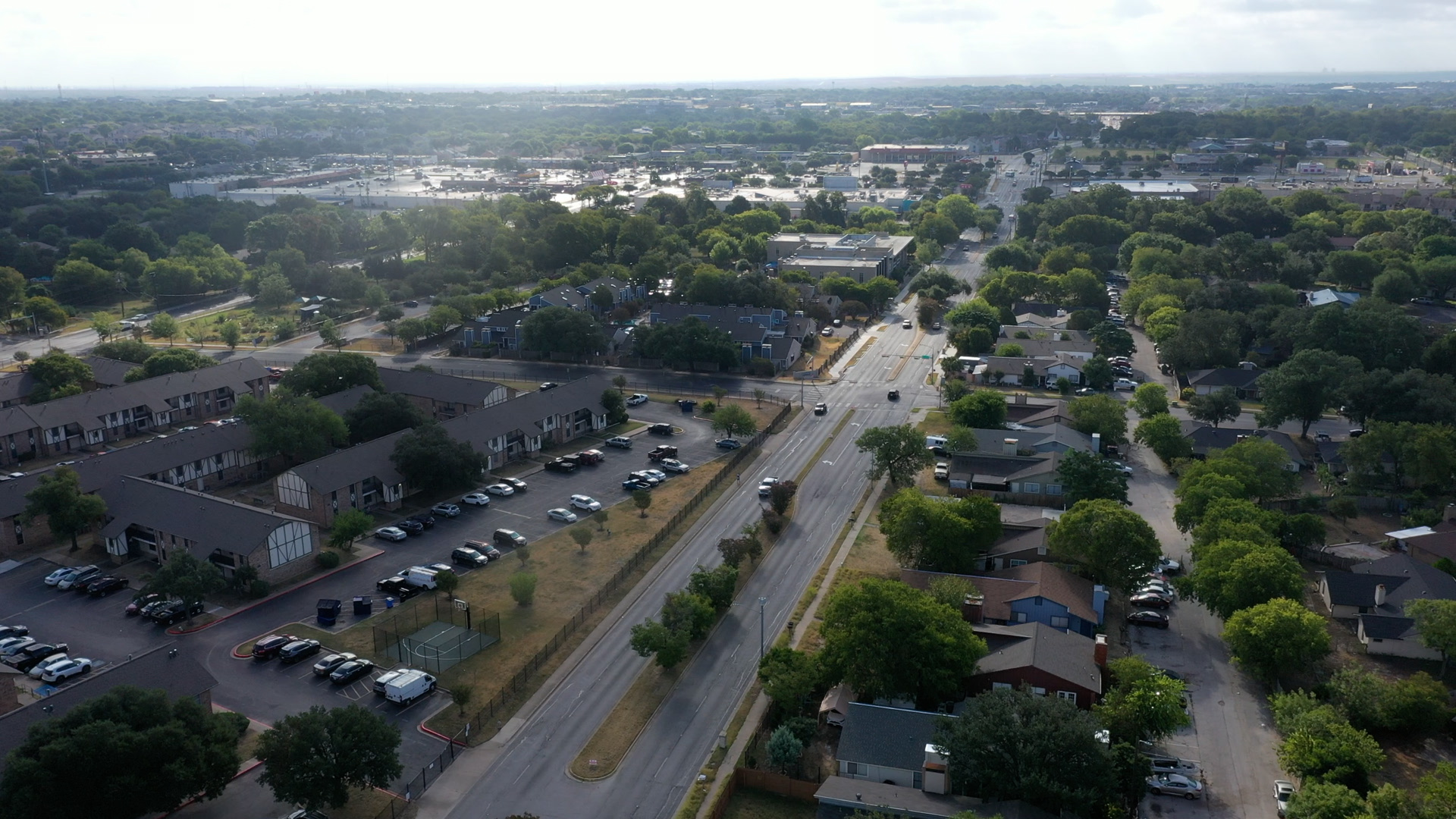
An aerial shot of Rundberg Lane facing east towards Lamar Boulevard.
Much of that fear has come from increased Immigration and Customs Enforcement activity, or ICE. After H.R. 1 passed last year, ICE became one of the highest funded federal agencies. The bill funneled $170 billion towards immigration and border security, with additional funds being allocated to hire more officers. In January the Department of Homeland Security announced that ICE had more than doubled its number of officers and agents. And large operations have taken place in cities like Minneapolis and Chicago.
Rundberg residents have already seen impacts in their community. ICE has made several arrests in the community, one notably in front of Dobie Middle School. And new state laws now mandate a level of cooperation with ICE. City leaders cited one of the new bills, SB 4, as part of the reason why a mother and her young daughter were deported after calling 911. All of this, Carrasco says, has created a fearful atmosphere in Rundberg.
“We had three students that did not enroll because their parents were scared to enroll them,” Carrasco says. “For me to be telling a dad, hey, they have to come to school, and for him to tell me, I want to make sure he gets home, like, that's tough.”
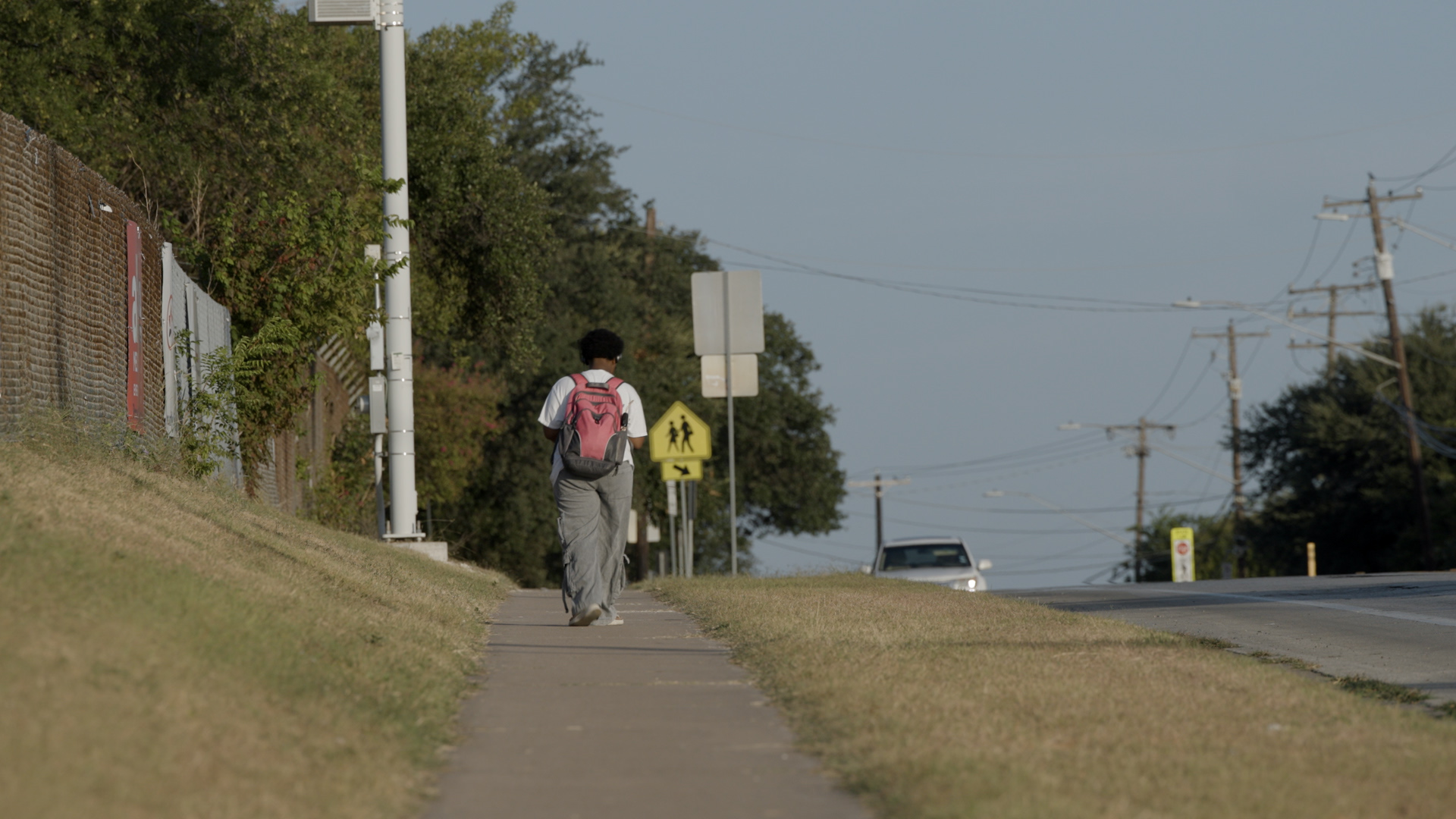
A student walks to school in Rundberg. Carrasco says several students did not re-enroll this year out of fear of ICE in the community.
Carrasco says that fear of being detained or deported has impacted how residents interact with the Austin Police Department.
“I talked about this community policing a year ago where I really wanted it to be a trust thing,” Carrasco says. “So a year ago we were far from that. Now we're just miles and miles away."
There was a community policing initiative in Rundberg in 2013. The Restore Rundberg Revitalization Project, along with APD, received a three-year, $1 million grant from the Department of Justice. Community policing was a major component of the project, with increased foot patrols and an emphasis on officers building relationships with community members. Crime rates dropped during this period, but when the grant ended, crime rates went back to their pre-2013 levels. A year ago, Carrasco was hopeful that renewed emphasis on community policing could help rebuild trust between APD and the community. A year later, his optimism has dimmed.
“I don't know when that conversation will ever start again,” Carrasco says.
A conversation that has only grown more urgent for Carrasco is how to help Rundberg residents. It’s an area where residents have often needed additional resources. 211 call data shows that the Rundberg area has one of the highest call volumes in central Texas, with most callers seeking help with housing and food. But federal funding cuts have only exacerbated those challenges. The Central Texas Food Bank and Austin Public Health have both lost millions of dollars in federal funds. And more hyperlocal programs like ATX Peace, which promotes gun safety and violence prevention, have taken major funding hits that have drastically impacted their ability to help the Rundberg community. Carrasco says his organization, Austin Voices for Education and Youth, have seen a lot more people requesting assistance. AVEY organizes several weekly food banks around Rundberg, as well as training and hiring community health workers.
“We've seen numbers go up because folks are having a tough time working or the person that was making the money has been deported,” Carrasco says. “It just feels like an uphill battle trying to help people right now.”
It’s been a year fraught with challenges for Carrasco and other organizers trying to help the Rundberg community. But he does have a piece of advice for himself, if he could talk to the Jose from a year ago.
“I would tell myself that the little things count, that there's nothing too small,” Carrasco says. “Just help one person at that moment, and then help the next person, and then help the next person, and you'll get there.”
Ways To Get Involved
Volunteer with the Central Texas Food Bank. They provide food for mobile pantries and food banks across Rundberg and central Texas. There are daily volunteer opportunities.
Volunteer with Austin Voices for Education and Youth. They operate several food banks and provide other services to residents in north Austin and the Rundberg area.
Vote in local elections. Texas will have runoff elections for several races in May ahead of November's general election. Find out about what's on your ballot at vote411.org.
Community journalism doesn’t happen without community support.
Got story ideas, advice on how we can improve our reporting or just want to know more about what we do? Reach out to us at news@klru.org.
And if you value this type of reporting, then please consider making a donation to Austin PBS. Your gift makes the quality journalism done by the Decibel team possible. Thank you for your contribution.
More in Health:


See all Health posts


Contact Us
Email us at news@klru.org